
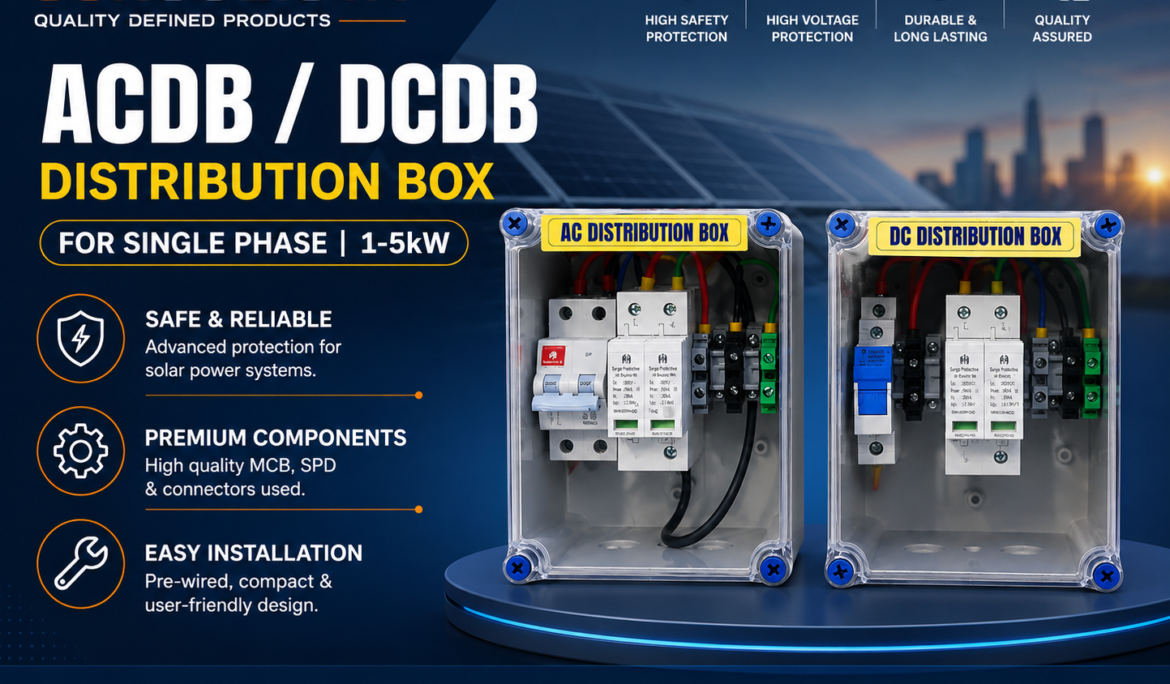
A Solar DCDB (DC Distribution Box) is an important part of the electrical protection arrangement in many solar PV systems. It brings together the designed DC connections and houses suitable isolation and protection components between the solar panel strings and inverter. For a 1–5kW rooftop solar system, selecting the right Solar DCDB means checking the PV voltage, current, string configuration, inverter requirements and installation conditions—not choosing a box by kilowatt rating alone.
What Is a Solar DCDB?
A Solar DCDB, or DC Distribution Box, is an enclosure used on the DC side of a solar PV system. It provides a suitable place for specified protection and isolation components and helps organise the DC connections between the solar panel strings and the inverter. Depending on the system design, a DCDB may include a DC isolator, surge protection device (SPD), string fuses where required, terminals and associated wiring.
The exact components are not identical in every installation. They depend on the number of PV strings, module and inverter specifications, system voltage, current ratings, earthing arrangement and applicable electrical standards. The DCDB must therefore be selected to match the actual project design—not only the inverter’s kilowatt rating.
How Does a DCDB Work in a Solar System?
Solar modules generate direct-current electricity. In a system that uses a separate DCDB, the DC cables from the PV array are routed to the box. The installed protection and isolation devices perform their specified functions, and the outgoing DC connection is routed towards the inverter.
- Connection point: Brings the designed PV string connections together in an organised enclosure.
- Isolation: A correctly rated DC isolator can disconnect the DC circuit for permitted maintenance or emergency procedures.
- Surge protection: A correctly selected DC SPD helps limit transient overvoltage surges. Its type, rating and installation must suit the system and lightning-protection design.
- Overcurrent protection: String fuses or other protective devices are included where the system design and applicable requirements call for them.
- Inverter supply: The protected DC output is connected to the inverter in accordance with the manufacturer’s instructions.
Solar DCDB Components: Important Protection Devices
1. DC Isolator
A DC isolator is designed to disconnect the DC circuit when isolation is required. It must be specifically rated for the DC voltage and current of the installation. An AC switch should never be substituted for a DC-rated device.
2. Surge Protection Device (SPD)
A DC SPD helps protect connected equipment against transient voltage surges. Selection depends on the PV system voltage, earthing arrangement, exposure and coordination with other protection. An SPD is not a replacement for correct earthing or a complete lightning-protection system.
3. String Fuses and Terminals
String fuses may be required to protect PV strings against reverse-current conditions, depending on the array configuration and module specifications. Properly rated terminals and connectors provide secure electrical connections. Their current, voltage and conductor-size ratings must match the design.
4. Enclosure and Internal Wiring
The enclosure should be suitable for the installation environment, with appropriate ingress protection, material properties, cable entries, clearances and temperature ratings. Neat internal wiring and clear circuit identification make inspection and maintenance easier.
DCDB vs ACDB: What Is the Difference?
Both boxes are used for electrical distribution and protection, but they serve different sides of a solar power system.
| Point | DCDB | ACDB |
|---|---|---|
| Side of system | DC side, between PV array and inverter (where specified) | AC side, after the inverter |
| Electrical supply | Direct current from solar modules | Alternating current from inverter |
| Typical devices | DC isolator, DC SPD and string fuses where required | AC MCB/MCCB, AC SPD and other specified protection |
| Main role | DC-side connection, isolation and protection | AC-side distribution, isolation and protection |
DC and AC equipment is not interchangeable. Devices must be selected for the correct current type and electrical ratings. The overall arrangement also varies with inverter design and local electrical requirements.
How to Select a Solar DCDB for a 1–5kW System
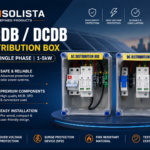
The product visual shown here presents Sun Solista ACDB and DCDB distribution boxes for single-phase 1–5kW applications. The correct configuration for a particular project should still be confirmed against the PV array and inverter datasheets. Before ordering, review these points:
- System voltage and current: Check maximum PV open-circuit voltage, operating current and the inverter’s permitted DC input limits.
- Number of strings: Confirm how many strings enter the box and whether string-level fuses are required.
- Protection devices: Verify DC isolator and SPD type, voltage, current and short-circuit ratings.
- Enclosure suitability: Check IP rating, material, UV and weather exposure suitability, mounting location and cable-entry arrangement.
- Connections: Confirm connector compatibility, conductor cross-section, terminal capacity and correct polarity marking.
- Standards and documentation: Request applicable test reports, certificates, datasheets and wiring diagrams for the exact supplied configuration.
- Installation and service: Ensure there is adequate access for inspection and that installation can be completed by a qualified solar/electrical professional.
Solar DCDB Build Quality and Correct Installation
A distribution box is a safety-related part of the electrical installation. A compact, pre-wired arrangement can make connections more organised, but it does not remove the need for correct design, inspection and commissioning. Components should be genuine and appropriately rated; wiring should be properly terminated; polarity, torque, insulation, earthing and protective-device operation should be checked by a qualified professional.
The Sun Solista product visual highlights high safety protection, high-voltage protection, durable construction, quality assurance, MCB and SPD components, connectors, a compact pre-wired design and fire-resistant material. For a project-specific Solar DCDB purchase, ask for the technical datasheet and applicable test or certification documents for the exact model and configuration.
Get the Right Solar Distribution Box from Sun Solista
Whether your project needs a Solar DCDB, ACDB or a coordinated distribution arrangement, start with the solar array and inverter specifications. Sun Solista supplies solar and electrical products for residential, commercial and industrial requirements. Share your system capacity, inverter model, PV string details and installation location so the appropriate configuration can be reviewed. For general information about India’s rooftop solar programme, refer to the Ministry of New and Renewable Energy rooftop solar programme.
Have a requirement for a solar DCDB or ACDB? Contact Sun Solista to discuss your project and request product details.
Frequently Asked Questions
Is a DCDB required for every solar system?
Not necessarily as a separate enclosure in every design. The required DC isolation and protection arrangement depends on the inverter, PV configuration, applicable standards and project design. Follow the inverter manufacturer’s instructions and local electrical requirements.
Can an ACDB be used instead of a DCDB?
No. ACDB and DCDB equipment is designed for different electrical circuits. AC-rated devices must not be used on DC circuits unless they are explicitly rated for that DC application.
What information is needed to choose a DCDB?
Provide the PV module details, string count, maximum DC voltage and current, inverter model, earthing arrangement and installation environment. These details help a qualified designer or supplier identify suitable ratings and components.