
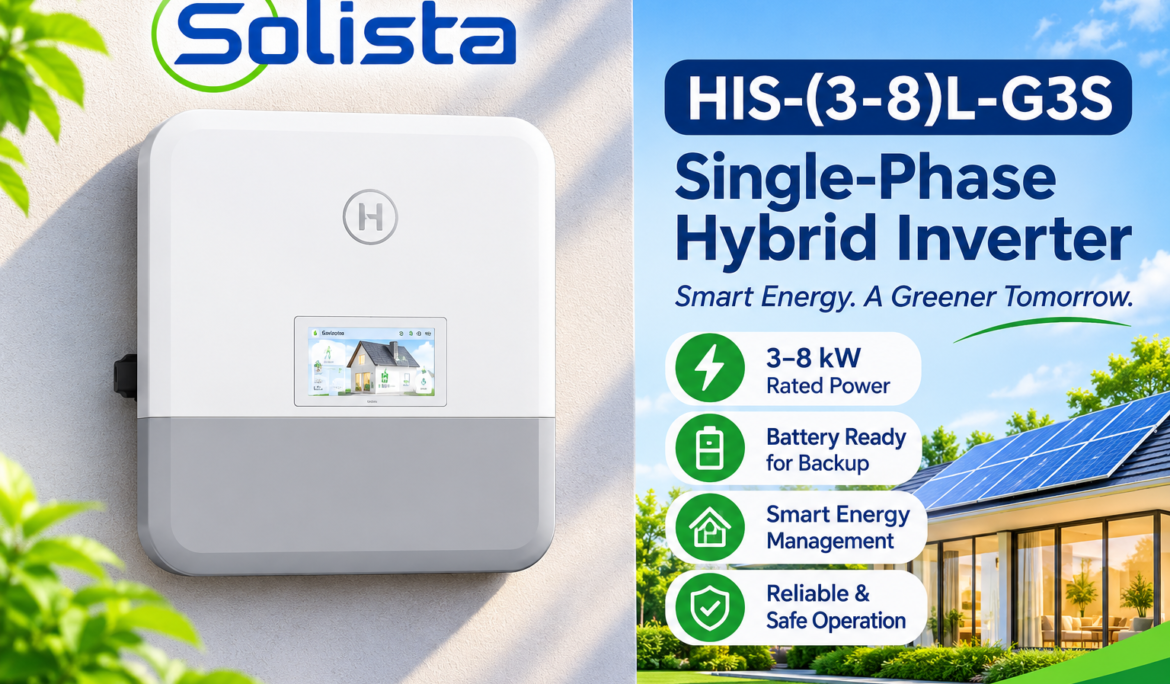
A single phase hybrid inverter helps a home use solar electricity, store surplus energy in a compatible battery and draw power from the utility grid when required. For Indian homeowners combining rooftop solar with battery backup, choosing the right inverter means looking beyond its kW rating. The electrical connection, appliance loads, solar-panel input, battery compatibility and backup output all need to match.
Sun Solista installs solar inverters and is a Master Authorised Distributor of Hoymiles in India. We support customers with genuine Hoymiles inverter solutions, product selection, system planning, installation and technical assistance. Our team can help assess your site’s electrical connection, energy needs and backup requirements before recommending a suitable system.
Table of Contents
- What Is a Single Phase Hybrid Inverter?
- How Does It Work?
- Key Benefits for Indian Homes
- Single Phase vs Three Phase Hybrid Inverter
- How to Choose the Right Inverter
- What Size Inverter Do You Need?
- Installation Considerations
- Frequently Asked Questions
- Choose a Solution with Sun Solista
What Is a Single Phase Hybrid Inverter?
A single-phase hybrid inverter is a power-conversion and energy-management unit designed for a single-phase electrical connection. It coordinates electricity from solar panels, a compatible battery and the utility grid. Depending on the model and configuration, it can supply household loads, charge the battery, use grid power when solar generation is insufficient and provide backup to designated circuits during a grid outage.
Unlike a basic grid-tied inverter, a battery-capable hybrid model can store energy for later use. However, backup operation is not automatic on every product: confirm that the exact model has an approved backup or EPS output, and check which circuits it can support.
How Does a Single Phase Hybrid Inverter Work?
The inverter manages energy according to solar production, household demand, battery state of charge and its programmed operating mode. A typical system works in these ways:
- During sunny hours: Solar power can supply connected loads first. If generation is higher than demand, available surplus may charge the battery or be exported to the grid where the inverter settings and local approvals allow it.
- When solar generation falls: The inverter can use stored battery energy or draw the shortfall from the grid, depending on its settings and battery reserve.
- At night: A charged battery can supply supported loads. When the battery reaches its configured reserve, the system may switch to grid supply.
- During a power cut: A backup-capable system can isolate from the grid and supply the circuits connected to its backup output, within the inverter and battery limits.
Key Benefits of a Single Phase Hybrid Inverter for Indian Homes
Solar Energy Storage
Instead of using all available solar energy only when it is generated, a compatible battery system can store some of the surplus for evening or other periods when solar production is low.
Backup for Essential Appliances
With a correctly sized battery and a suitable backup output, selected loads such as lights, fans, routers and essential office equipment may continue operating during a grid outage. High-power appliances such as air conditioners, pumps and electric heaters need careful assessment because their running and starting power can be substantial.
Better Use of Rooftop Solar
Energy-management settings can help increase on-site use of solar generation. The actual benefit depends on the household’s load profile, solar-array size, battery capacity, system efficiency and applicable electricity tariff.
Flexible Energy Management
Depending on the inverter, users may be able to configure self-consumption, battery reserve, grid charging or export limits. Available modes and functions vary by manufacturer and model.
Single Phase vs Three Phase Hybrid Inverter
The correct choice starts with the property’s sanctioned electrical connection and load distribution—not simply the size of the rooftop. A single-phase inverter is intended for a compatible single-phase supply. A three-phase inverter is designed for a three-phase connection and distributes power across three phases according to its design.
| Comparison | Single-phase hybrid inverter | Three-phase hybrid inverter |
|---|---|---|
| Electrical connection | Single-phase supply | Three-phase supply |
| Typical application | Homes and suitable small premises | Larger homes and commercial premises with three-phase supply |
| Load planning | Check total single-phase load and backup output | Check phase-wise loads and inverter phase limits |
| Selection priority | Match the existing connection and required loads | Match the three-phase connection and load distribution |
Do not assume that a single-phase inverter can operate a three-phase installation, or that one inverter will back up every circuit in a building. Ask a qualified solar professional to review the electrical connection and distribution board before finalising the design.
How to Choose the Right Single Phase Hybrid Inverter
Compare the complete system specifications rather than selecting a product only by its advertised capacity.
1. Check the AC Output Rating
List the appliances that may operate simultaneously and calculate their running demand. Also account for motor starting surges from equipment such as pumps and air conditioners. Check both the inverter’s continuous output and its documented surge capability.
2. Match the Solar PV Input
Review the maximum PV input power, maximum DC voltage, MPPT operating range, maximum input current and number of MPPTs. The solar-panel string design must stay within the inverter’s electrical limits in the site’s expected temperature conditions.
3. Verify Battery Compatibility
Confirm the supported battery chemistry, nominal voltage, usable capacity range, charge and discharge current limits, and communication compatibility. For lithium batteries, check that the exact battery model and its Battery Management System (BMS) are supported by the inverter manufacturer. Do not assume that every lithium battery can be connected to every hybrid inverter.
4. Understand the Backup Output
Ask whether the model provides an EPS or backup output, its continuous and peak power limits, changeover behaviour and supported operating conditions. Confirm which circuits will be connected to the backup supply and whether solar panels can continue charging the battery during an outage.
5. Review Protection, Monitoring and Warranty
Review the manufacturer’s documentation for electrical protection, temperature limits, enclosure rating, monitoring options, applicable Indian compliance requirements, warranty terms and service support. Installation should follow the manufacturer’s instructions and local electrical and utility requirements.
What Size Single Phase Hybrid Inverter Do You Need?
There is no one inverter size that suits every home. The right rating depends on the maximum simultaneous load, solar-panel capacity, battery system, backup expectations and the limits of the property’s electrical connection.
Before requesting a quotation, prepare a list of appliances, their rated power, expected operating hours and which ones must run during a power cut. Share recent electricity bills and details of any existing solar installation. The installer can then assess the load, PV array and battery as one coordinated system.
Single Phase Hybrid Inverter Installation Considerations
- Have the site’s single-phase connection, distribution board and earthing checked by a qualified professional.
- Install the inverter in a location that meets the manufacturer’s ventilation, clearance, temperature and environmental requirements.
- Use correctly rated DC and AC isolators, breakers, cables and surge protection as required by the approved design.
- Ensure battery placement, cabling, isolation and protection follow the battery manufacturer’s instructions.
- Configure grid settings, export control and backup circuits in line with the local DISCOM requirements and applicable approvals.
- Test grid-connected operation, backup changeover, battery charging, monitoring and protective functions during commissioning.
Single Phase Hybrid Inverter: Frequently Asked Questions
Can a single-phase hybrid inverter run a house during a power cut?
It can supply the circuits connected to its backup output if the model supports backup operation and the battery and inverter are adequately sized. Whole-home backup should never be assumed without checking the design and load limits.
Does a hybrid inverter always need a battery?
Not always. Some models support operation without a battery, while others require a compatible battery for particular functions. Check the exact model’s manual before planning a battery-free installation.
Can I use a lithium battery with a single-phase hybrid inverter?
Yes, when the inverter supports the battery’s voltage range, charging profile and communication protocol. Confirm compatibility for the exact inverter and battery models.
Will a hybrid inverter reduce my electricity bill?
It may reduce grid consumption by increasing the use of solar energy generated on-site. Savings depend on system design, household consumption, battery losses, tariffs, export rules and how the system is operated. A battery does not guarantee a lower bill in every situation.
Can I export excess solar electricity to the grid?
Export depends on the inverter’s capabilities, configuration, metering arrangement and the applicable DISCOM and state regulations. Obtain the required approvals before enabling grid export.
Choose a Suitable Single Phase Hybrid Inverter with Sun Solista
Selecting a single-phase hybrid inverter requires a clear understanding of your electrical connection, daily energy use, essential backup loads, solar-panel design and battery requirements. Sun Solista installs solar inverters and is a Master Authorised Distributor of Hoymiles in India. We provide genuine Hoymiles inverter solutions and help customers with product selection, system planning, installation, commissioning and technical support, subject to the specific product and project requirements.
Contact Sun Solista to discuss your residential or small-premises solar and battery-storage requirements. Share your load details and backup expectations so the system can be assessed before equipment selection.
Technical references
For a basic explanation of hybrid solar PV system operation, see the Directorate General of Training rooftop solar PV training material. For an example of model-specific operating modes and backup limitations, consult the relevant manufacturer’s single-phase hybrid inverter user manual. Always follow the manual for the exact equipment being installed.